
J&K REQUIRES FOUR EXCLUSIVE NIA COURTS TO HANDLE PENDING CASES; ONLY ONE NOTIFIED SO FAR
Supreme Court Seeks Fresh Status Reports From Centre, States and UTs; 47 NIA Cases Pending in Jammu and Kashmir

NEW DELHI, NOVEMBER 17: The Supreme Court has sought updated reports from the Centre, State Governments and Union Territory administrations on the establishment of exclusive special courts for expeditious trials under the National Investigation Agency (NIA) Act and the Narcotic Drugs and Psychotropic Substances (NDPS) Act, amid concerns over the growing pendency of cases across the country.
During the proceedings on Monday, the apex court took note of the progress made towards setting up dedicated courts and observed that the implementation of its earlier directions had not advanced sufficiently.
Significantly, Jammu and Kashmir has informed the Supreme Court that four exclusive courts are required to deal with cases registered under the NIA Act, considering the pendency of 47 cases across the Union Territory. However, only one such court has been notified so far, highlighting the need for additional judicial infrastructure to ensure timely disposal of cases.
A bench comprising Justice Joymalya Bagchi and Justice V. Mohana considered the submissions made by Additional Solicitor General Aishwarya Bhati, representing the Union Government, regarding the progress achieved in establishing the proposed special courts.
The bench indicated that the suo motu proceedings would be taken up again after a few weeks, preferably before the commencement of the Supreme Court’s winter vacation in December. Meanwhile, the Centre, States and Union Territories have been directed to submit updated status reports detailing the steps taken to operationalise the required courts.
The proceedings also focused on the increasing number of narcotics-related offences and the substantial backlog of cases under the NDPS Act.
According to an affidavit submitted by the Union Government, 449 exclusive courts have been identified as necessary nationwide for the speedy trial of NDPS cases. Of these, 176 courts have already become operational, while the remaining courts require further action.
The Supreme Court had earlier, on September 7, directed the concerned authorities to accelerate the establishment of dedicated courts, preferably within six weeks. It had also stressed the importance of providing adequate infrastructure and appointing sufficient judicial and supporting staff to make the proposed courts functional.
The bench observed that the increasing number of narcotics offences, coupled with the large volume of pending cases, made it essential for the authorities to act without further delay.
Apart from NDPS matters, the apex court also examined the status of exclusive courts for conducting trials under Section 11 of the NIA Act, 2008.
The court noted that several States had made progress in establishing dedicated courts, particularly in jurisdictions having more than ten pending cases. Such courts are generally being allocated around 10 to 12 cases to facilitate focused hearings and ensure that trials are completed within the stipulated timeframe.
The Supreme Court also reviewed requirements communicated by different States. Karnataka informed the bench about plans to establish three exclusive NIA courts at Bengaluru, Chikkamagaluru and Udupi. Tamil Nadu stated that one of its proposed courts had started functioning, while the second was expected to become operational shortly.
Kerala assured the court that two exclusive courts would be established, while Assam was asked to expedite the setting up of two additional courts. West Bengal was directed to establish three more exclusive courts, taking the proposed total to five.
The directions come as the Supreme Court continues to monitor the availability of dedicated judicial infrastructure for dealing with serious offences under the NIA and NDPS laws.
For Jammu and Kashmir, the requirement of four exclusive NIA courts against the existing pendency of 47 cases assumes particular significance. With only one court notified, the need for expeditious action to establish the remaining courts remains an important issue for ensuring effective prosecution and timely justice.
The matter is expected to come up before the Supreme Court again in the coming weeks, when the authorities will be required to place their latest progress reports before the bench.(KNC)

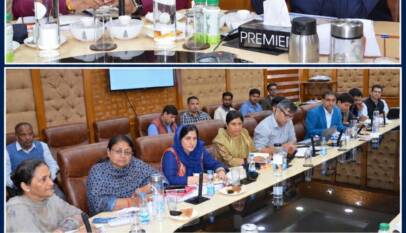

NITI Aayog holds first National Workshop on “Leadership as a Mission” on the completion of 25 years of Prime Minister Shri Narendra Modi as Head of Government
New Delhi: NITI Aayog organised the National Workshop on “Leadership as Mission” at Bharat…
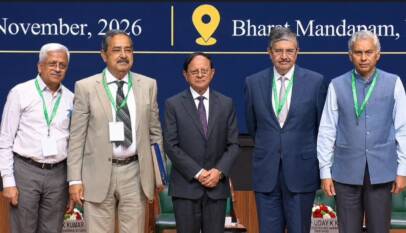
NITI Aayog holds first National Workshop on “Leadership as a Mission” on the completion of 25 years of Prime Minister Shri Narendra Modi as Head of Government
New Delhi: NITI Aayog organised the National Workshop on “Leadership as Mission” at Bharat …