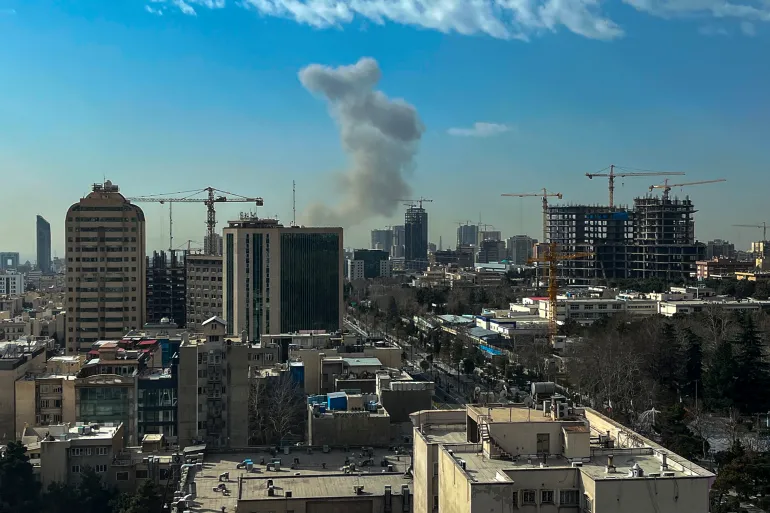
Escalating Middle East Conflict Threatens Global Oil Supply as Iran Warns of $200 Oil

Tensions across the Middle East have sharply intensified following a series of military attacks, threats to international shipping routes, and coordinated strikes between regional actors. The escalating situation has raised fears of a major disruption to global energy supplies and a potential surge in oil prices.
Iran has warned that the world should prepare for oil prices reaching $200 per barrel, as Iranian forces reportedly targeted merchant ships in the Gulf region. The warning comes amid growing concerns over the security of the Strait of Hormuz, a critical maritime passage through which roughly 20 percent of the world’s oil supply flows.
According to reports, two foreign oil tankers were attacked near Iraq’s port of Al-Faw, while Gulf countries including Kuwait, Qatar, the United Arab Emirates and Saudi Arabia intercepted several Iranian missiles and drones aimed at regional energy infrastructure.
In response to the worsening crisis, the International Energy Agency (IEA) has recommended a large-scale release of strategic oil reserves to stabilize global markets. Analysts warn the situation could trigger one of the most severe oil shocks since the 1970s energy crisis.
Iranian President Masoud Pezeshkian has outlined three conditions for ending hostilities: international recognition of Iran’s “legitimate rights,” payment of reparations, and binding guarantees preventing future aggression against Tehran.
Meanwhile, United States President Donald Trump has pledged to protect oil tankers traveling through the Strait of Hormuz, emphasizing that the United States would respond to any threats against international shipping.
The conflict has also intensified on Israel’s northern front. The Lebanese armed group Hezbollah and Iranian forces launched coordinated attacks against Israel while Israeli forces continued large-scale air strikes on Beirut, the Lebanese capital.
Hezbollah claimed responsibility for multiple overnight attacks on Israeli targets, including a drone strike on the Ya’ara barracks in northern Israel, as well as missile attacks on the Beit Lid base, the Glilot intelligence base near Tel Aviv, and the Atlit naval base near Haifa. The group also reported launching drones and rockets toward the Israeli coastal city of Nahariya and firing artillery at Israeli troops in southern Lebanon.
Hezbollah further stated that a drone strike on the Meron Air Operations Command and Control Base caused damage to one of its radar systems.
Regional tensions have spread beyond Israel and Lebanon. Fuel storage facilities in Bahrain were reportedly attacked, while drone strikes targeted fuel tanks in the Omani port city of Salalah. In a separate incident, a cargo vessel in the Strait of Hormuz was attacked, leaving three sailors missing and 20 others rescued by the Omani coast guard.
Iranian authorities claimed the targeted vessel was a Thai-flagged ship that ignored Iranian instructions while transiting the strait. Tehran warned that all vessels must seek permission to pass through the waterway and declared that the United States and its allies would not be allowed unrestricted access to the route.
The Strait of Hormuz remains one of the world’s most strategically important shipping corridors, and any disruption there could have immediate and severe consequences for global energy markets.
With attacks spreading across multiple fronts and energy infrastructure increasingly targeted, international observers warn the crisis could escalate further, threatening regional stability and global economic security. (Agencies)



Government Reconstitutes Central Board of Film Certification with 18 Members
16 SEP 2026 New Delhi : The Government of India has reconstituted the Central Board of F…
Government Reconstitutes Central Board of Film Certification with 18 Members
16 SEP 2026 New Delhi : The Government of India has reconstituted the Central …