Global Reaction to US–Israel Strikes on Iran and Tehran’s Retaliation

Global Reaction to US–Israel Strikes on Iran and Tehran’s Retaliation
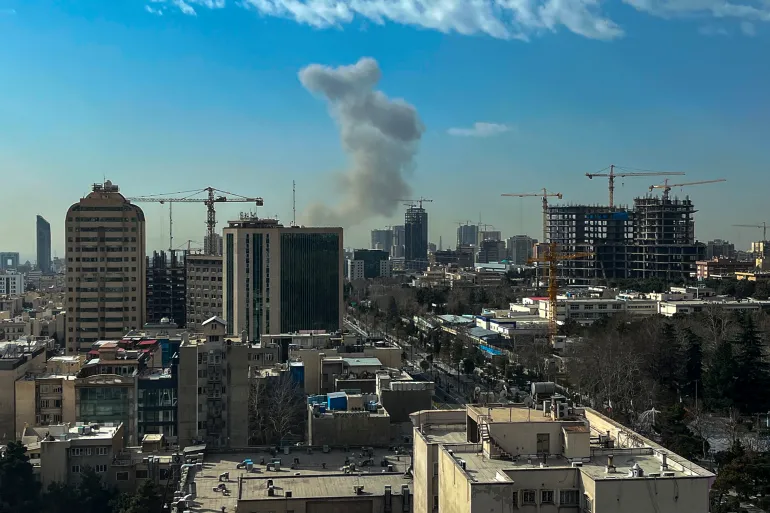
The outbreak of direct conflict involving the United States and Israel against Iran has triggered urgent diplomatic activity and mounting international concern, as Iranian retaliatory strikes expand across the region.
Governments and international organizations have issued calls for restraint amid fears that the confrontation could spiral into a wider Middle East war.
United States
US President Donald Trump announced that the United States had launched what he described as a “major combat operation” aimed at “eliminating threats from the Iranian regime.” The announcement followed missile strikes across Tehran and other Iranian cities.
Trump said the operation sought to dismantle Iran’s missile capabilities and naval power, while urging the Iranian people to rise against their government. The US involvement has drawn criticism internationally, particularly as Washington had been engaged in nuclear negotiations with Tehran prior to the escalation.
Israel
A senior Israeli defence official told Reuters that the joint US-Israeli attacks had been planned for months, with a launch date determined weeks in advance.
Prime Minister Benjamin Netanyahu described the strikes as necessary to eliminate what he called an “existential threat” posed by Iran. He said the operation would help “create the conditions for the brave Iranian people to take their fate into their own hands.”
Israel has maintained that Iran’s military infrastructure and regional influence present a direct threat to its national security.
Iran
Iran’s Ministry of Foreign Affairs accused the US and Israel of violating the United Nations Charter and pledged a severe response.
Iran has since launched retaliatory missile strikes not only toward Israel but also at US-linked military installations in Gulf states hosting American forces, including Qatar, United Arab Emirates, Bahrain and Kuwait.
A senior Iranian official told Al Jazeera that “all American and Israeli assets and interests in the Middle East have become a legitimate target,” adding: “There are no red lines after this aggression.”
Hezbollah
The Lebanese armed group Hezbollah condemned the US-Israeli strikes as a “blatant violation of international law and the United Nations Charter.”
The group declared solidarity with Iran and called on regional populations to resist what it described as attempts to impose domination and destabilize the region.
United Nations
United Nations Secretary-General Antonio Guterres condemned the escalating military actions and called for an “immediate cessation of hostilities.”
He warned that the exchange of force undermines international peace and security and could trigger a broader regional conflict with grave consequences for civilians. The UN Security Council is scheduled to convene an emergency session.
European Union
European Commission President Ursula von der Leyen and European Council President Antonio Costa described the conflict as “greatly concerning,” urging all parties to exercise maximum restraint, protect civilians, and respect international law.
Red Cross
International Committee of the Red Cross President Mirjana Spoljaric warned that a “dangerous chain reaction” of escalation is unfolding across the Middle East.
She called on all sides to respect the rules of war and seek political solutions to prevent further civilian casualties and destruction.
Oman
Oman, which has served as a key mediator in US-Iran negotiations, expressed dismay at the violence.
Foreign Minister Badr Albusaidi urged Washington not to deepen its military involvement, warning that further escalation would not serve US or global interests. Oman’s Foreign Ministry called for an immediate ceasefire and an emergency UN Security Council session.
Germany, France and the United Kingdom
In a joint statement, the leaders of Germany, France and the United Kingdom condemned Iranian missile attacks on regional countries and reaffirmed their commitment to civilian protection and regional stability.
French President Emmanuel Macron called for an urgent UN Security Council meeting, warning of “serious consequences” for international peace.
UK Prime Minister Keir Starmer stated that British aircraft were participating in coordinated defensive operations in the region, while urging Iran to halt its weapons programs and regional violence.
Qatar
Qatar strongly condemned Iranian missile strikes on its territory, where the Al Udeid Air Base hosts US forces. The Qatari Ministry of Foreign Affairs described the attack as a violation of national sovereignty and reserved the right to respond in accordance with international law.
United Arab Emirates
The United Arab Emirates condemned Iranian missile strikes, stating that several were intercepted by air defenses. The UAE Ministry of Defence labeled the attacks a dangerous escalation and asserted its right to respond.
Bahrain
Bahrain confirmed that an Iranian missile targeted the headquarters of the US Navy’s Fifth Fleet based in the country, calling the attack “treacherous.”
Growing Risk of Regional War
With retaliatory strikes extending into multiple Gulf states hosting US military assets, and global powers urging restraint, fears are mounting that the confrontation could expand into a broader regional conflict.
Diplomatic channels remain active, but the pace of military escalation has outstripped political mediation efforts. The coming days are likely to determine whether the crisis moves toward de-escalation or deepens into sustained regional warfare. (Aljazeera)


Advisory for Responsible Use of Social Media and Reporting by Media Organisations/Portals
Budgam 6th March :District Police Budgam urges media organizations, social media us…
Advisory for Responsible Use of Social Media and Reporting by Media Organisations/Portals
Budgam 6th March :District Police Budgam urges media organizations, social media users and …