J-K govt to begin regularization of daily wagers in 2026; fill 30,000 vacancies: CM Abdullah

All tourist spots in J-K likely to reopen by May; 9 new sites to be introduced, climate response now ‘compulsion’ for J-K; need department studying climate change, action against big land sharks first, others later, CM on land encroachment, says 3,500 MW of J&K’s 18,000 MW hydropower potential developed so far
Jammu: Jammu and Kashmir Chief Minister Omar Abdullah on Thursday said the government will initiate the process of regularising daily-rated, ad hoc and other temporary employees in a legally and financially sustainable manner in 2026, even as it works to fill nearly 30,000 vacant posts during the current year.Replying to the discussion on grants of his departments and cut motions in the Assembly, Abdullah said the issue of daily wagers and temporary workers was raised by members across party lines and acknowledged that the problem had persisted for decades. “These employees have been struggling for 20, 30 and even 40 years. No government has been able to fully resolve the issue,” he said.
“During the discussion on the lieutenant governor’s address and later during the Budget session, I clearly stated that we would begin the process of regularisation of these employees in a legally and financially viable manner this year, God willing,” he said.The chief minister informed that a committee, under the supervision of the chief secretary, had been constituted to examine the matter to ensure that any policy framed does not get stuck in courts or the finance department. “Once the committee submits its report and the groundwork is completed in a transparent manner, we will place everything before the people,” he added.
Rejecting any suggestion of a hurried decision, Abdullah said regularisation could not be done overnight. “I am not willing to mislead these employees by merely signing a paper without proper preparation,” he said, adding that the number of such workers — whether 70,000, 80,000 or one lakh — would be worked out through a proper timetable.Over one lakh daily wagers and casual labourers are currently engaged across government departments in Jammu and Kashmir, the chief minister informed the Assembly on Tuesday, assuring that a legally sustainable approach is being adopted on the issue of their regularisation.
He highlighted that the registered workforce includes 69,696 casual labourers, 8,836 daily rated workers, 8,534 seasonal labourers, 5,757 food and civil supplies helpers, 2,153 part-time sweepers and 1,929 persons engaged through the hospital development fund.On the matter of employment generation, the chief minister mentioned that there was a clear distinction between the creation of posts and appointments. “We have created posts, but filled far more — around 6,000 to 6,500 posts,” he said, reiterating that the government aims to fill nearly 30,000 vacant posts this year without creating new positions.
He also assured the House that all vacancies would be filled in a transparent and time-bound manner in coordination with the Selection Board and the Public Service Commission, to avoid legal challenges that had derailed recruitment processes in the past.
Highlighting the efforts to revive tourism following the Pahalgam terror attack in April 2025, Jammu and Kashmir Chief Minister Omar Abdullah announced on Thursday that all currently closed tourist destinations are expected to reopen by May.He also revealed that the government is working on plans to introduce nine new tourist destinations to further strengthen and diversify the tourism industry in the Union Territory.
Winding up the discussion on Demands for Grants in the legislative Assembly here, Abdullah said his government worked “step by step” to revive tourism in the aftermath of the April 22, 2025, Pahalgam terror attack, at a time when many in the industry believed visitors would not return to the Union Territory for years.He said the administration engaged extensively with tourism stakeholders, rebuilt confidence through sustained outreach, and gradually restored activity despite several destinations remaining closed and restrictions in place at key locations.
The chief minister mentioned that improving tourist infrastructure is a key priority, as visitors often point out that while Pahalgam, Gulmarg, and Sonamarg are exceptionally beautiful, they lack adequate basic facilities such as toilets and other conveniences. “The government is committed to addressing these gaps,” Abdullah said.
The chief minister emphasised that attracting first-time visitors to J-K is not difficult, but true success lies in ensuring they return. “Repeat tourism is the real benchmark of a strong and sustainable tourism industry, and that is where the government is now placing its focus.”Highlighting the turnaround, Abdullah noted that hotels in famous winter destinations like Gulmarg and Sonamarg are now operating at full capacity, while Srinagar is witnessing significant tourist footfall, asserting that these indicators reflect the steady revival of the sector.
“Tourism is a very important sector for Jammu and Kashmir. The reality is that when we were discussing the budget and grants last year, we had no idea that we would face such difficult circumstances (the Pahalgam attack that left 26 persons, mostly tourists, dead).”We revived tourism at a time when we were forced to tell people that ‘you can come to Kashmir, but you cannot visit Doodhpathri or Yousmarg’. We even had to tell tourists that ‘you may go up by the gondola (cable-car), but you cannot move beyond the roadside eateries on the right side’. Despite all this, we gradually brought tourism back to life,” the chief minister said.
He stated that while the Centre has ordered the reopening of many tourist destinations, some sites remain closed.”There are certain things I cannot state openly, but I can assure you that discussions have taken place with the Central government. They also have certain constraints. However, you can assume that by May, all these destinations will reopen,” the chief minister said.
Simultaneously, he mentioned that his government is exploring the potential of new destinations. “I had mentioned in this House last year that under multilateral funding, we wanted to open nine new destinations in J-K. The reality is that we had almost reached the stage of signing the multilateral funding agreement, but an obstacle arose which we could not overcome.
“Now, in consultation with the Centre, under a Centrally funded scheme, we will open nine new destinations. Their names will be released gradually. I assure you that people of Jammu will have no reason for complaint — Jammu will get its fair share,” he said.In Jammu, he noted that some projects are nearing completion, including Jammu Lake and the Jammu Riverfront.
“Even the Riverfront project has certain limits — it has not been extended to its full length. After discussing with the department, we intend to extend the Riverfront to its complete end under SASCI or some other scheme, so that just as Ahmedabad developed the Sabarmati Riverfront beautifully, we too can enhance the pride and beauty of Jammu and take it forward,” Abdullah said.
He asserted that the government cannot bring every beautiful area onto the tourism map. “No matter how much promotion we do, tourists ultimately go where they choose. I cannot force a tourist to visit a particular place.”However, he said the government is making full efforts to develop at least one small or large tourist destination in every area — promote it, market it, build infrastructure there, and attract tourists.
“How successful it will be depends on many factors, but from our side, we will make every effort to ensure that the tourism network expands into remote areas, especially in Jammu, where we have a ready market, as more than one crore pilgrims visit the Mata Vaishno Devi shrine. If we can divert even 10 per cent of them, that is 10 lakh tourists, it can transform the entire economy of Jammu,” he said.
He said the effort of his government is to retain these visitors here for at least six or seven days — through border tourism, pilgrimage tourism, golf tourism, or by taking them to places like Bhaderwah and other regions.Kashmir is not a summer-specific tourist destination, the chief minister said, adding that the tourism season in the valley has expanded over the years.
“If you look at the winter season, places like Pahalgam, Gulmarg, and Sonamarg now witness fairly good tourist activity. In Srinagar and its surrounding areas, the Tulip Garden preponed the tourism arrivals,” he said.However, Abdullah said it was true that in October and November, the tourist footfall used to be lower. “To address that, we developed a new garden, Bagh-e-Gul-e-Dawood (Chrysanthemum Garden), which proved to be very successful. Our effort will be to further develop it this year.”
Jammu and Kashmir Chief Minister Omar Abdullah on Thursday said the climate response has now become a “compulsion” for the Union Territory, underlining the urgent need for a structured and institutional approach to address climate change.He also called for the formation of a specific department which will study climate change in Jammu and Kashmir.
Replying to the discussion on Demands for Grants in the Assembly here, he said last year’s extreme weather events, including heavy rains and drought-related losses, have made it clear that climate change can no longer be treated as a peripheral issue.Referring to the statement of CPI(M) legislator M Y Tarigami, Abdullah mentioned that he spoke about the introduction of a separate climate budget since the commencement of the Budget session early this month, and even moved a cut motion on this matter during the grants discussion.
“If seen from one perspective, climate response has become a compulsion for us. Just look at the situation last year — the damage caused by heavy rains and the losses due to drought. In this context, how we can adapt our budgeting process to address climate change is an important question. We have created a fund for this purpose and have also placed a corpus in it for climate change mitigation,” the chief minister said.
He stated that as suggestions come from Tarigami and others, the government will consider them.”But first, I believe we must assign responsibility for climate change to a specific department. As of today, no department has a defined responsibility to carry out an exercise on climate change. In my view, before even framing a climate budget, at the very least we should assign a department the responsibility to study what climate change actually is, whether it is affecting J-K, and if so, how its impacts can be reduced,” Abdullah said.
He noted that once a comprehensive assessment is carried out and institutional responsibility is clearly defined, the government would move towards targeted budgetary interventions to strengthen climate resilience across sectors.Tarigami has been advocating the introduction of a separate climate budget for Jammu and Kashmir, stating that the region is ecologically more fragile and vulnerable to adverse climatic conditions than most other parts of the country.
“As far as this region is concerned, it remains more affected by adverse climatic conditions than other areas,” Tarigami had said, urging the government to recognise climate change as a governance priority and allocate dedicated resources to mitigation and adaptation measures.
Taking a firm stand against encroachment on government land, Jammu and Kashmir Chief Minister Omar Abdullah on Thursday assured action in the matter and said it will begin with influential violators before targeting the poor.Winding up the discussions on grants of his departments in J&K Legislative Assembly, Abdullah said there was no disagreement over the need to remove encroachments, but stressed that the process must be fair and follow due advice given to departments.
“None of us is saying that action should not be taken against encroachers. One of the members, Sham Lal Sharma (BJP MLA), said while the bulldozers are used against the poor, the rich manage to escape; it reflects a long-standing practice that needs to be reversed. He has said the right thing,” he said.The chief minister asserted that the government would first move against powerful land grabbers who, he said, often shield themselves by aligning with political parties or leaders.
“When we initiate action, we must first proceed against the big land sharks and land grabbers who infiltrate different political parties and join leaders and manage to protect themselves,” he said.He assured the House that only after action against such influential encroachers would the government, if necessary, proceed against others, reiterating his commitment to an equitable and just approach.The members across party lines had raised the use of bulldozers in Jammu and Kashmir against the poor people and called for removing encroachments on government lands, starting from powerful people.
Jammu and Kashmir Chief Minister Omar Abdullah on Thursday said the Union Territory has an estimated hydropower potential of around 18,000 megawatts, of which only about 3,000-3,500 MW has been developed so far.The chief minister said that with the planned addition of new projects, total power generation in Jammu and Kashmir is expected to rise to nearly 7,000 MW in the coming years.
Detailed project reports and proposals for harnessing the remaining 11,000 MW of hydropower potential would be prepared in coordination with the central government and implemented in a phased manner over the next 10 to 15 years, he added.The chief minister said the power sector presents both a challenge and an opportunity, noting that J&K currently consumes more electricity than it generates and does not fully realise revenue from usage.
“If we properly harness our power potential, we may not need to depend on central assistance to the same extent,” he said.With the planned addition, total generation would rise to nearly 7,000 MW, Abdullah said, adding that detailed project reports and proposals for the remaining 11,000 MW would be prepared in coordination with the central government to be realised over the next 10–15 years.
The chief minister said the long-term goal is to make J&K self-sufficient in power and enable it to supply electricity to other parts of the country, particularly during peak summer demand.Emphasising that generation alone is insufficient, Abdullah said the distribution network must be strengthened under the Revamped Distribution Sector Scheme (RDSS). While some districts have implemented the scheme effectively, others have seen delays, he said, adding that he is personally monitoring progress and assured full implementation.
On revenue, Abdullah said that electricity consumption must be paid for, with government support for those who genuinely cannot afford it, including provisions such as up to 200 free units under schemes like PM Surya Ghar.He said the government is committed to ensuring proper metering and addressing discrepancies transparently, including cases where departmental collusion may have occurred.
Responding to concerns over privatisation, the chief minister said there is no proposal or necessity to privatise power distribution companies.”Our focus will be on improving accounting, budgeting and strengthening financial guarantees to improve their financial health,” he said.

2 Overground Workers Arrested In J&K’s Baramulla; IEDs, Arms Seized
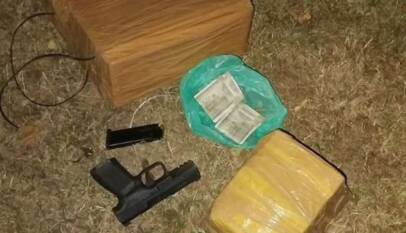
SRINAGAR, Oct 22: Security forces arrested two overground workers of terrorists and recove…
2 Overground Workers Arrested In J&K’s Baramulla; IEDs, Arms Seized
SRINAGAR, Oct 22: Security forces arrested two overground workers of terrorists and recovered arms …